If you have ever watched a K-pop music-show stage and heard hundreds of fans shout the same names, words and responses at exactly the right moment, it can sound almost rehearsed.
In a way, it is.
K-pop fan chants — usually called eungwonbeop in Korean — give fans a shared script for cheering during a song. Some are simple. Others are surprisingly detailed, with member names, repeated words, call-and-response sections and moments where fans are asked to sing along rather than just shout.
The part that often gets misunderstood is who actually creates them. Fans do not always invent the version you hear at official promotions, and the exact person who wrote an official fan chant is often not publicly credited. What fans usually receive is the finished guide through an artist’s official channel.
An Official Fan Chant Is More Than Fans Yelling Randomly
A good fan chant has to fit around the song without drowning it out. That sounds obvious, but it takes more planning than it seems.
The chant may place a group name in the intro, add member names during an instrumental gap, echo one word at the end of a line, or ask fans to sing a short phrase with the artist. Sometimes the quietest part of the guide is just as important as the loudest part. Fans are expected to leave space for the performance itself.
That is why official guides often mark exactly which words should be shouted and which parts belong to the song. They are closer to a cue sheet than a loose suggestion.
So Who Actually Writes the Fan Chant?
There is no single answer that applies to every group.
The final version is usually distributed through an official artist or agency channel, but the person who drafted every line is rarely named. Depending on the artist, input can come from the team around the comeback and sometimes from the members themselves, but unless that process is publicly documented, it is better not to guess who wrote what.
What matters to fans is the version that is officially published. Once that guide is out, it becomes the reference point for music shows, fan meetings and other official schedules.
This also explains why an unofficial cheer can be popular online and still not be the one used at a broadcast. Fan communities can invent their own chants, but an official event may ask the audience to follow only the published version.
Why Member Names Appear So Often
One of the most recognizable K-pop fan-chant patterns is the member-name roll call. Fans shout names in a fixed order, often during an intro or a section with enough space in the music.
It does two jobs at once. It sounds powerful in a studio or arena, and it turns the group’s lineup into part of the performance ritual. Even fans who do not know every lyric can often learn the name section first.
For larger groups, this can be one of the hardest parts for new fans. The speed is fast, the order matters, and the chant may land on a very specific beat. Miss one name and the rest of the sequence can suddenly feel harder than it looked on paper.
Why Some Parts Are Shouted and Others Are Sung
Not every fan chant is actually a chant.
Some guides ask fans to sing an existing lyric with the artist. Others use a short echo after the singer finishes a line. There may also be a cheer between sections, a group name before the chorus, or a single word repeated several times.
The timing is what makes it work. A shouted response in the wrong place can cover a vocal line. The same response placed in an empty beat can make the stage feel bigger without fighting the song.
Why Official Guides Use Colors and Marked Sections
Fan-chant guides are usually designed to be learned quickly. Color coding is one of the easiest ways to do that.
A guide may show the original lyrics in one style and highlight the parts fans should shout or sing in another. Some official notices go even further and tell fans not to add unofficial phrases during official events.
That may sound strict, but it keeps a room full of people on the same beat. If half the audience follows one chant and the other half adds a different one from social media, the result can turn messy very quickly.
Why Fan Chants Matter So Much at Music Shows
Music-show studios are small compared with concert arenas. That makes the audience sound much closer to the microphones and the stage.
A coordinated chant can make a comeback stage feel energetic even with a relatively small number of fans inside. The artists also know when the audience response is coming, which creates a rhythm between the stage and the crowd.
This is one reason fans attending a pre-recording are often expected to learn the chant before they arrive. There is not always enough time inside the studio to teach hundreds of people from the beginning.
If you want to understand how those fans get into the studio in the first place, KWaveScope’s guide to K-pop music-show pre-recordings explains the early-morning check-ins, application windows and roll calls.
Concert Fan Chants Feel Different From Music-Show Fan Chants
The guide may be the same, but the atmosphere is not.
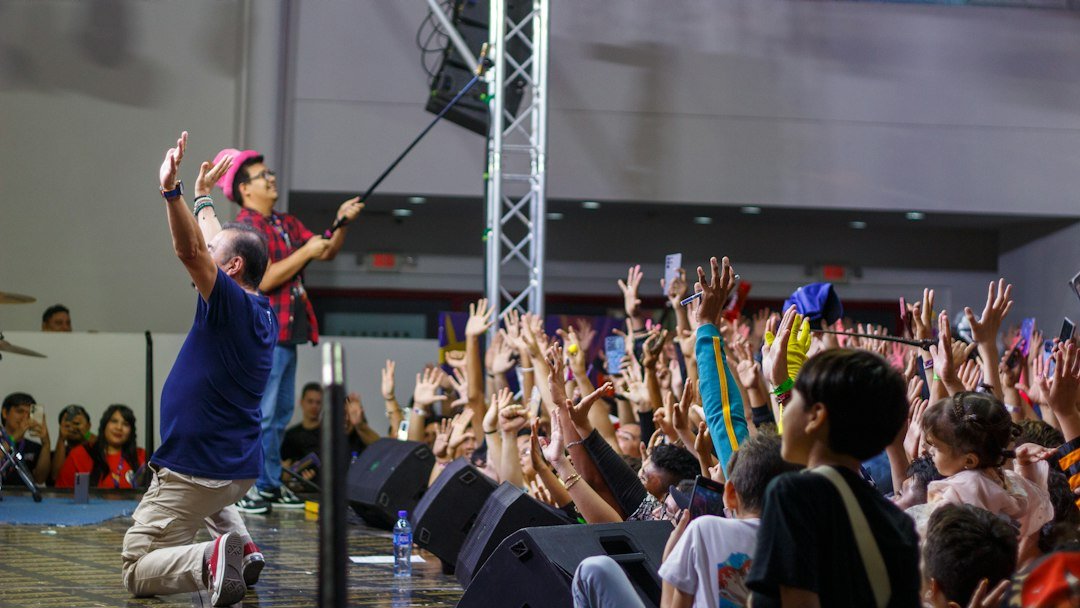
In a small broadcast studio, the chant can sound sharp and almost perfectly synchronized. In a stadium, the same words spread across a much larger space, and the crowd noise around them becomes part of the experience.
Concerts also leave more room for spontaneous cheering. Fans scream after a high note, react to a member speaking, sing along to an entire chorus or start a crowd response that was never written into the official guide.
That does not make the official chant less important. It just means a concert audience is not following a script every second of the night.
Can Fans Create Their Own Chants?
Of course. Fan communities have always created jokes, responses and unofficial cheers of their own.
The difference is where they are used. An unofficial chant can spread through a fandom and become well known, but that does not automatically make it part of an official music-show guide.
For an official schedule, the safest move is simple: use the version posted by the artist’s official channel. At concerts, the crowd may be much looser depending on the artist, venue and fan culture.
Why New Fans Sometimes Find Fan Chants Intimidating
Watching an experienced crowd can make the whole thing look harder than it is. Everyone seems to know exactly when to yell, when to stop and when to wave the light stick.
Most fans learn it the same way they learn a difficult part of a song: one section at a time.
The name roll call comes first. Then the repeated responses. Then the tricky timing. Nobody needs to memorize an entire guide in one sitting.
And at a concert, missing a line is not a disaster. The point is to support the performance, not pass an exam.
A Simple Way to Read a Fan-Chant Guide
| What you see | What it usually means |
|---|---|
| Member names | Shout the names in the listed order and timing |
| Highlighted words | Fans join on those specific words or phrases |
| Repeated phrase | Echo or answer the artist at a set point |
| Cheer cue | Make noise rather than sing a lyric |
| Light-stick instruction | Wave or move the light stick during the marked section |
The exact symbols and colors can differ by artist, so do not assume every guide uses the same legend. Read the instructions at the top before trying to memorize the chant.
What Changes From Comeback to Comeback
A group does not need to use the same kind of chant for every song.
A loud title track may have a dense chant with names and repeated hooks. A slower song may leave much more space. A performance-heavy track might use only a few well-placed responses because constant shouting would work against the mood.
That is one reason fan chants are worth looking at as part of the comeback rather than as a generic fandom tradition. The structure often reflects the song itself.
The Best Fan Chants Do Not Compete With the Song
The most memorable fan chants usually feel like they belong in the performance. They fill a gap, answer a lyric, build tension before a chorus or make a member-name section hit harder.
That is probably the easiest way to understand why official guides exist at all. A crowd of hundreds or thousands of people is powerful, but only if everyone knows when to come in.
So when a music-show audience suddenly shouts a member’s name at exactly the right beat, it is not magic and it is not random. Someone gave the crowd a map, and the fans learned how to use it.
Source
- Weverse — NCT 127 “BLINGY” Fanchant Guide
Official fan-chant formats and event rules vary by artist and promotion. Always check the artist’s latest official guide before attending a music show or other official event.