Three things happened in Mexico City within the same week.
Mexico’s president publicly said the country expects BTS to return in 2027. Stray Kids closed a major Latin American run with two nights at Estadio GNP Seguros. And South Korean President Lee Jae-myung and First Lady Kim Hye-kyung visited the first of those shows and met young Mexican K-pop fans.
Taken separately, each event is easy to file under a different label: celebrity news, touring news, diplomacy.
Taken together, they tell a much bigger story.
Mexico is no longer just another stop on a K-pop tour map. It is becoming one of the places where fandom size, stadium business and cultural diplomacy are starting to overlap.
First, a presidential comment put BTS back in the Mexico conversation
On September 24, Mexican President Claudia Sheinbaum met South Korean President Lee Jae-myung at the National Palace in Mexico City as part of Lee’s state visit.
During the joint message that followed, Sheinbaum brought up K-pop directly. She noted that Stray Kids would perform in Mexico the next day and said the country also expected BTS to return in 2027.
That line immediately became entertainment news, and understandably so. BTS already has an enormous Mexican fanbase, and any mention of a future return is guaranteed to travel quickly.
The wording still needs some care. Sheinbaum had already said in May that the seven members agreed in principle to return to Mexico in 2027, and she repeated that expectation after meeting Lee. But there are still no artist-side dates, venues or ticket details.
So this is stronger than a random political aside, but it is not yet a tour announcement fans can book around.
The striking part is that a future BTS visit has become important enough to surface in presidential diplomacy at all.
Stray Kids gave Mexico a much more concrete number
While BTS provided the headline, Stray Kids provided the clearest evidence of current demand.
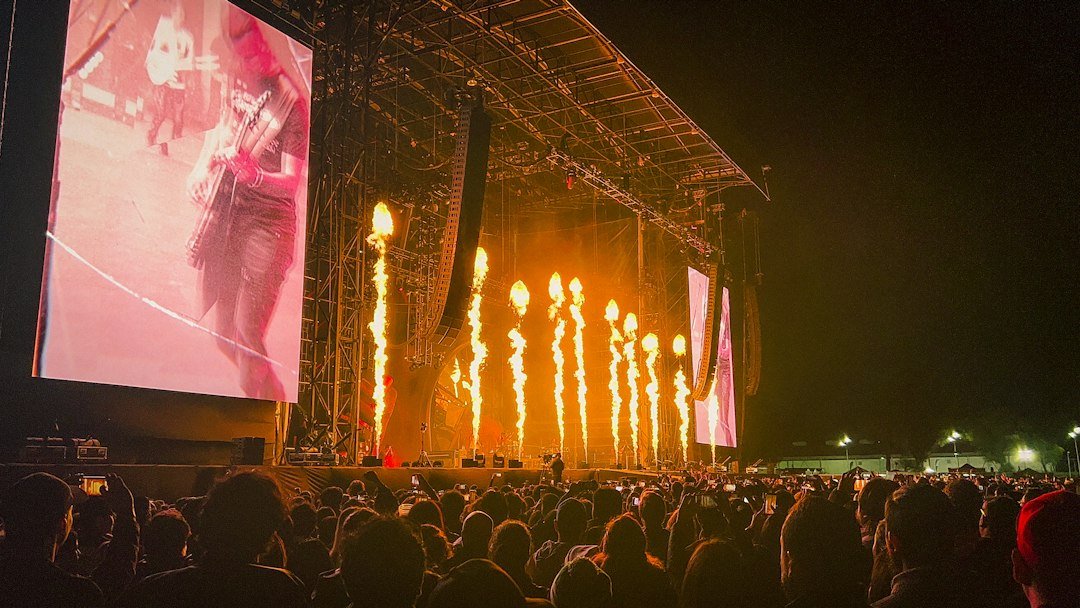
The group brought its STRAYCITY run to Estadio GNP Seguros in Mexico City on September 25 and 26. The first date sold out quickly enough that promoters added a second night, and both shows were later listed as sold out.
This was not a small arena test.
Estadio GNP Seguros is one of Mexico City’s major large-scale concert venues. Filling it once is significant. Creating enough demand to add and sell a second night tells a different story.
For top-tier K-pop acts, Mexico is starting to look capable of supporting repeat stadium-scale business rather than a single special-event appearance.
That is what promoters care about: not just a loud online fandom, but demand they can count on when tens of thousands of seats go on sale.
The second show matters more than the first one
The most revealing part of Stray Kids’ Mexico stop may be the extra date.
A first show can be helped by pent-up demand, scarcity or the excitement of a long-awaited return. A second show forces the market to prove there are still tens of thousands of buyers left after the first ticket rush.
Mexico did that.
The same pattern had already appeared elsewhere on the group’s Latin American run. Buenos Aires added a second date after the first sold out within hours. Mexico City repeated the sellout-and-expand cycle at an even more established K-pop market.
For promoters, this is the kind of behavior that changes planning.
One sold-out night says an artist is popular. Two large dates suggest a city may deserve a bigger role in future routing.
Mexico is becoming more than a final stop on the Latin America leg
For years, Latin America was often treated by global pop touring as a region to visit selectively after North America or Europe.
K-pop has been changing that relationship.
Mexico, Brazil, Chile, Argentina and other markets have built fan communities that are highly organized, willing to travel and capable of creating visible demand before a tour is announced.
Mexico stands out because it combines several things at once: a huge population, established concert infrastructure, strong local promoters and a fanbase large enough to support both major stadium acts and smaller touring artists.
That gives the market unusual range.
A superstar can play a stadium. A mid-sized group can test a theater or arena. Labels can run fan events, pop-ups and commercial partnerships. And when a major act arrives, the story can spill out of fandom spaces and into mainstream Mexican media.
The Korean presidential visit added another layer
On September 25, President Lee Jae-myung and First Lady Kim Hye-kyung visited the Stray Kids-led STRAYCITY concert at Estadio GNP Seguros.
According to the South Korean presidential office, Lee met the Stray Kids members and spent time with Mexican young people who had come to the concert because of their interest in K-pop.
The visit did not turn the show into a government event. It remained a commercial concert built around an entertainment act and its fans.
Still, the symbolism was hard to miss. K-pop fandom was being treated as a visible part of the relationship between the two countries.
That would have sounded unusual twenty years ago.
Today, it fits a much larger shift in how South Korea’s cultural exports function abroad.
K-pop is now part of cultural diplomacy — whether fans think about it that way or not
Most fans do not buy concert tickets because they are thinking about international relations.
They buy tickets because they like the group.
But governments pay attention when popular culture begins shaping how young people see another country.
K-pop leads fans toward Korean language, food, beauty products, television, fashion and travel. Over time, that creates familiarity that traditional diplomacy often struggles to build on its own.
Mexico’s government has clearly noticed that connection.
During the same presidential meeting, Sheinbaum discussed expanding cultural exchange and mentioned the possibility of establishing a K-pop cultural center in Mexico, alongside a Mexican cultural institute in South Korea.
The South Korean side also highlighted the extraordinary level of Mexican interest in Korean culture beyond music, including K-beauty and K-food.
Once that happens, fandom begins to spill beyond entertainment.
A sold-out concert may start with music, but the interest around it can travel into tourism, retail, language study, beauty, food and wider cultural exchange.
Stray Kids is especially useful as a market signal
BTS is so large that its numbers can sometimes make any market look extraordinary.
Stray Kids offers a cleaner way to read the market.
The group is obviously one of the biggest K-pop acts in the world, but its Mexico demand shows that stadium-level interest is not confined to BTS.
Two sold-out nights at a major stadium point to a wider K-pop audience capable of supporting more than one global headliner.
The group’s wider 2026 Latin American run strengthens that case. Stray Kids became the first K-pop act to headline Rock in Rio’s main stage, played sold-out dates in Argentina and then finished the run with back-to-back stadium nights in Mexico City.
The pattern matters more than the record headline.
K-pop is not simply dropping into Latin America for occasional prestige dates. Promoters are building routes they can return to.
Mexico gives K-pop something the industry always needs: density
Global popularity can be misleading.
An artist may have millions of streams spread across dozens of countries but still struggle to fill a large venue in any one city.
Touring needs density.
There have to be enough fans within reasonable traveling distance of a venue, and enough of them have to be willing to pay at roughly the same time.
Mexico City has repeatedly demonstrated that density for K-pop.
That is much more useful to a promoter than a global social-media number.
When fans can fill large venues on consecutive nights, a city becomes easier to justify in future tour budgets. Marketing becomes less speculative. Local partnerships become easier to value. Merchandise planning becomes more predictable.
At that point, fandom starts to shape the economics of touring.
The presidential attention should not be confused with official artist scheduling
One caution still matters.
Sheinbaum’s 2027 BTS comment is meaningful, especially because she had already discussed a return directly with the group in May. But fans still need an official artist-side announcement before treating 2027 Mexico plans like bookable tour dates.
This is common in global entertainment. Government officials, venue operators, promoters and artists may all know that discussions are taking place at different stages, but the actual tour calendar is normally announced through the artist or company.
So the useful takeaway is not “BTS has announced a 2027 Mexico concert.”
It is that Mexico’s president is publicly talking about an expected BTS return while the country is simultaneously hosting sold-out Stray Kids stadium shows.
That combination says more about Mexico’s position in the K-pop market than a speculative date ever could.
What Mexico offers K-pop that smaller markets cannot
Mexico has a rare combination of scale and cultural engagement.
The country can support very large live events, but it also has enough fan activity to sustain K-pop between those events through retail, dance communities, media coverage, fan projects and Korean cultural programming.
That matters because touring alone does not build a durable market.
The strongest music markets have activity between concerts.
Fans discover groups, buy albums, organize events, watch content, follow releases and keep the local community visible long before the next artist arrives.
By the time a tour date is announced, demand has already been building for months or years.
Mexico increasingly looks like that kind of market for K-pop.
The bigger story is not one group. It is the system around them.
BTS may return in 2027. Stray Kids just proved that two major stadium nights can sell. A South Korean president attending a K-pop event gave the week an unusual diplomatic dimension.
Those are the headlines.
What has changed is the number of layers operating at once.
It is entertainment for fans.
It is a touring market for promoters.
It is a commercial opportunity for Korean companies.
And it is increasingly part of how Mexico and South Korea talk about cultural exchange.
That does not mean every K-pop act can suddenly fill a Mexican stadium, or that every presidential comment will become a confirmed tour.
It means the market has matured enough that the industry is paying attention to more than online enthusiasm.
There are ticket sales, repeat dates, stadiums, government interest and a growing cultural ecosystem around the music.
Mexico is not simply waiting for the next K-pop concert.
It is becoming one of the places helping define how large K-pop can become in the Americas.
For more on Stray Kids’ Latin American expansion, see KWaveScope’s look at the group’s historic Rock in Rio 2026 appearance. For a different side of the live business, our HYBE CINE FEST 2026 analysis looks at how K-pop concerts are also expanding through cinema distribution.
Sources
Presidencia de México — Mexico–Korea bilateral meeting transcript, September 24, 2026
Latin Times — Stray Kids’ two sold-out Mexico City nights, September 26, 2026
Office of the President of the Republic of Korea — President Lee and First Lady attend STRAYCITY in Mexico City, September 26, 2026