BTS NFL stadium records have moved into a new category in 2026. Billboard’s latest comparison of concerts staged at 30 National Football League stadiums in the United States places BTS at the top of the all-time box-office list at multiple venues, led by a four-show run at Allegiant Stadium in Las Vegas that generated about $49.5 million in ticket sales and drew roughly 246,000 concertgoers. The result is the highest-grossing concert run reported at Allegiant Stadium since the venue opened.
The scale is significant even by stadium-tour standards. Allegiant Stadium is home to the Las Vegas Raiders and one of the most commercially important large venues in the United States. BTS did not set the record with a single night. The group held four ARIRANG world-tour concerts there on May 23, 24, 27 and 28, 2026, turning one venue into a multi-night destination event. HYBE’s official Weverse notice confirms those four dates and the Allegiant Stadium location, while SBS, Yonhap, Maeil Business Newspaper and other outlets reporting Billboard’s ranking all cite the same record-setting scale.
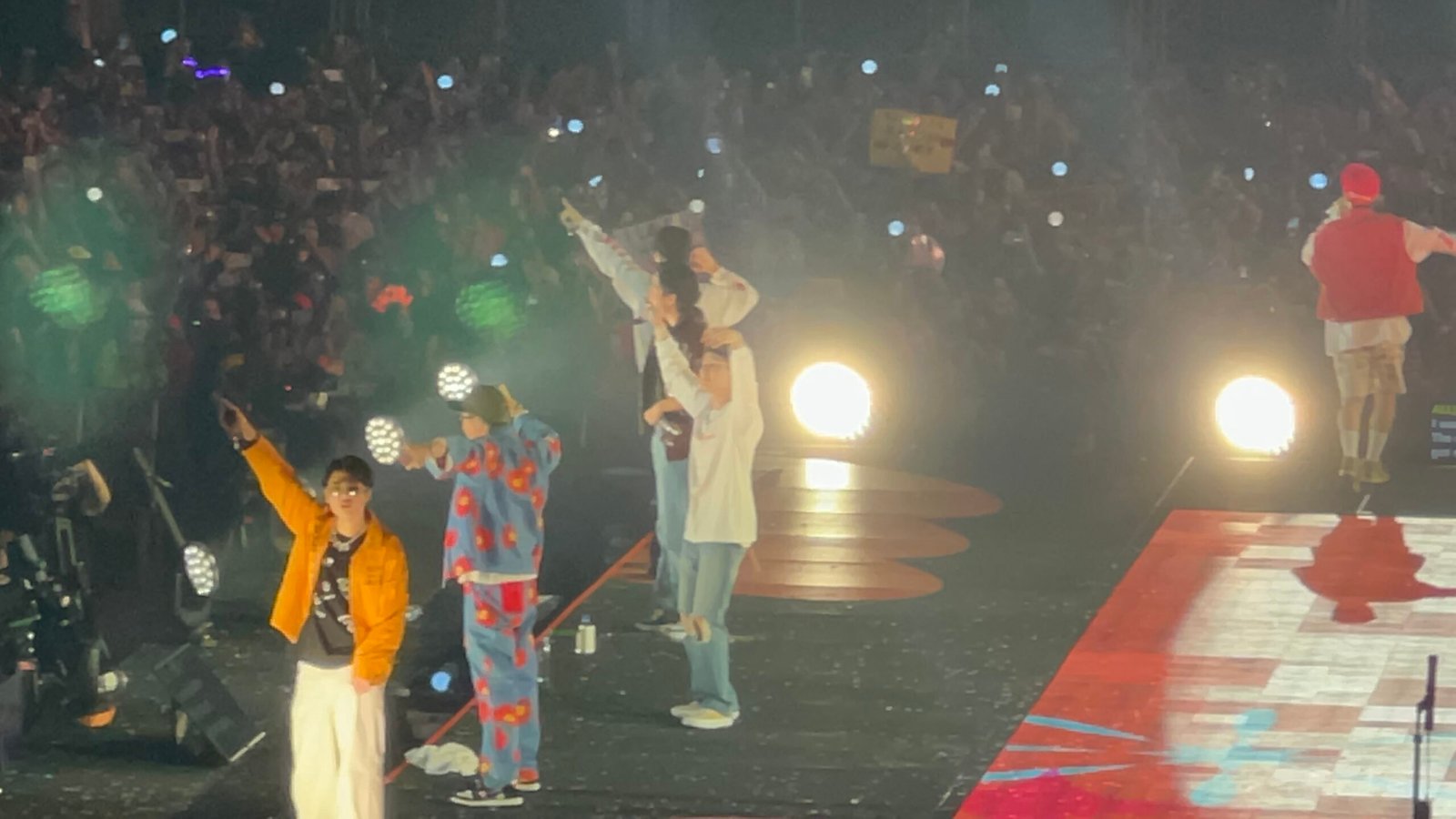
Watch BTS in Las Vegas: THE CITY ARIRANG
BANGTANTV’s official 2026 video “Las Vegas Welcomes BTS | THE CITY ARIRANG LAS VEGAS” captures the scale of the group’s Las Vegas takeover during the ARIRANG era. It offers a direct official visual reference for the same city and stadium run discussed in this article.
Watch “Las Vegas Welcomes BTS | THE CITY ARIRANG LAS VEGAS” on YouTube
BTS NFL Stadium Records: The Allegiant Stadium Number
The headline figure is the Las Vegas result. Billboard’s NFL-stadium comparison, as reported by multiple Korean and international outlets, credits BTS with approximately $49.5 million in ticket revenue from the four Allegiant Stadium shows and an audience of about 246,000. Korean reports convert the gross to roughly 66 billion won.
SBS used a rounded figure of $49 million in its English-language report, while Yonhap, Maeil Business Newspaper and other reports citing the same Billboard ranking give the more precise $49.5 million figure. The difference is therefore a rounding issue rather than a conflict in the underlying record. The attendance figure is consistently reported at approximately 246,000.
| Venue | Reported BTS gross | Billboard ranking context |
|---|---|---|
| Allegiant Stadium, Las Vegas | $49.5 million | No. 1 all-time at the venue since opening |
| Raymond James Stadium, Tampa | $40.7 million | No. 1 all-time at the venue |
| Gillette Stadium, Foxborough | $28.7 million | No. 1 all-time at the venue |
| M&T Bank Stadium, Baltimore | $27.6 million | No. 1 all-time at the venue |
| MetLife Stadium, New York/New Jersey | $31.8 million | No. 3 all-time at the venue |
The wording matters. BTS did not simply become “the No. 1 concert act at every NFL stadium.” Billboard’s comparison looked across 30 NFL stadiums and found that BTS held the top reported concert-gross position at several individual venues. At Allegiant, Gillette, M&T Bank and Raymond James, the group’s 2026 tour results ranked first in those stadiums’ histories. At MetLife Stadium, BTS ranked third with a reported $31.8 million gross.
Allegiant Stadium Is Especially Important Because BTS Beat Its Own Record
The Allegiant result has another unusual detail: BTS was already one of the biggest concert attractions in the venue’s history before the 2026 run. Reports on Billboard’s ranking say the group’s 2022 Las Vegas concerts remain second on Allegiant Stadium’s all-time list. In other words, BTS’s 2026 ARIRANG run did not merely surpass another artist. It replaced the group’s own earlier benchmark at the same stadium.
That comparison shows how much the live business around BTS has expanded. Stadium records are influenced by the number of shows, ticket prices, stage configuration, demand, production scale and the number of seats that can be sold. A four-night run also gives an artist a larger revenue ceiling than a one-night show. But that does not make the achievement automatic. Selling enough tickets to sustain four stadium dates in one city remains a major test of demand.
HYBE turned the Las Vegas stop into more than a set of concerts. The company’s official BTS THE CITY ARIRANG – LAS VEGAS program included citywide activations, red illumination events, pop-ups, transportation branding and other experiences across the Las Vegas Strip. That strategy effectively treated the tour stop as a city-scale cultural event rather than a conventional concert weekend.
Four NFL Stadiums, Four No. 1 Gross Records
Las Vegas is the biggest number, but the broader story is that BTS also reached the top at three other NFL stadiums. Yonhap’s report on Billboard’s ranking lists $28.7 million at Gillette Stadium in Foxborough, $27.6 million at M&T Bank Stadium in Baltimore and $40.7 million at Raymond James Stadium in Tampa. Each of those figures is described as the highest-grossing concert result in the respective stadium’s history.
This is why the 2026 ranking matters beyond one spectacular Las Vegas weekend. The same tour is producing venue records in different markets with different audience bases: Florida, New England, the Mid-Atlantic region and Nevada. That geographic spread is one of the strongest signals of stadium-level touring power. It suggests that demand is not dependent on a single city or a single fan hub.
MetLife Stadium offers an equally useful comparison even though BTS did not rank first there. The New York metropolitan venue is one of the largest and most competitive stadium concert markets in the United States. BTS reportedly generated $31.8 million there, placing third in the venue’s all-time ranking. A third-place result at MetLife can still be commercially enormous, particularly when the comparison includes decades of global superstars touring the New York area.
Why NFL Stadiums Are a Different Level of Touring
Football stadiums have a very different scale from arenas. A large indoor arena might host roughly 15,000 to 20,000 people for a major concert depending on production. NFL venues can be configured for crowds several times larger. The jump changes almost everything: ticket inventory, production cost, staffing, transportation, local security, merchandise operations and the amount of demand required to make multiple dates viable.
Billboard’s stadium comparison is therefore not just another chart of K-pop tours. It places BTS in the same commercial conversation as artists whose touring businesses are built around the largest venues in North America. Korean reports summarizing the ranking specifically mention Beyoncé and country-music icon George Strait as examples of the global touring names used to frame the scale of the market.
For K-pop, that distinction is important. The genre has already proved that it can fill arenas around the world. Stadium touring is the harder test because the supply of tickets becomes much larger. An act needs both a broad fan base and enough repeat demand to support multiple nights. BTS’s 2026 results show that the group is operating at that level across several American cities.
The 246,000 Figure Is a Four-Show Total
One detail that can easily be misunderstood is the attendance number. The approximately 246,000 figure does not mean 246,000 people attended one BTS concert. It is the cumulative audience reported across the four Allegiant Stadium shows in May. That distinction is important for accuracy.
The same principle applies to the gross. The $49.5 million figure is the combined ticket revenue associated with the four-show stadium run, not a single-night box office. Multi-night totals are standard in touring analysis because they show how much demand an artist can sustain at one venue during the same tour stop.
Even after making that distinction, the average scale remains striking. Dividing 246,000 attendees across four concerts produces an average of roughly 61,500 concertgoers per show. The exact nightly distribution can vary, but the total demonstrates that BTS maintained stadium-size attendance across repeated dates rather than relying on one exceptional night.
ARIRANG Has Become a Touring Story as Much as an Album Story
The 2026 ARIRANG era began as a major music comeback, but by September it has also become one of the year’s defining touring stories. BTS’s return to full-group activity created huge initial demand, yet the more revealing data has come from what happened after the opening weeks: repeated sellouts, record grosses and sustained stadium attendance across North America.
The North American leg eventually expanded far beyond the first spring dates. BigHit Music said the group completed 31 sold-out shows across 12 cities and attracted about 1.92 million fans over the North American run. The tour concluded that leg with four September concerts at SoFi Stadium in Los Angeles that drew roughly 282,000 people.
Those Los Angeles shows created a separate venue milestone. Including four BTS concerts at SoFi Stadium in 2021, the group has now performed there eight times in total and has drawn approximately 496,000 cumulative attendees, according to BigHit Music figures cited by Yonhap and KBS World. That is a different statistic from Billboard’s NFL-stadium gross ranking, but it reinforces the same broader point: BTS’s U.S. stadium business is operating at a rare scale.
Pollstar Data Points in the Same Direction
The Billboard venue records are not the only touring data supporting the trend. Korean reports citing Pollstar say BTS also debuted at No. 1 on both LIVE75 and Global Concert Pulse. The two charts measure different aspects of touring performance.
LIVE75 ranks tours using average ticket sales over a recent period. Reports say BTS averaged 72,004 tickets across six recent stadium shows included in that calculation. Global Concert Pulse focuses on average gross revenue, and BTS was reported at approximately $12.7 million per show across 18 performances in the relevant period.
That matters because a single venue record can sometimes be explained by an unusually strong market. Multiple indicators across different cities are harder to dismiss as a one-off. Billboard’s venue rankings, Pollstar’s average ticket-sales ranking and Pollstar’s average-gross ranking all point to the same conclusion: BTS is currently one of the most commercially powerful touring acts in the world.
What the Record Says About BTS After the Group Hiatus
The timing of these records is also central to the story. BTS spent years with limited full-group activity while members completed mandatory military service and pursued solo projects. A comeback after a long group break can generate a huge burst of curiosity, but maintaining demand across dozens of stadium concerts is a different challenge.
The 2026 tour suggests that the audience did not simply return for nostalgia. Fans continued buying tickets across an extended North American schedule, including cities that received multiple dates. The group also carried a new album and new songs into the stadium environment, allowing the tour to function as a current-era campaign rather than a retrospective reunion.
That difference is important when comparing BTS with legacy touring acts. Many veteran artists can sell stadiums primarily through catalog demand. BTS now has both a large back catalog and an active new-release cycle. The ARIRANG tour combines those two forms of demand, which helps explain why the group can attract longtime fans while also remaining visible on current global music charts.
BTS Is Now Competing With the Biggest Names in the U.S. Concert Business
For years, the most common way to describe BTS’s touring achievements was to compare the group with other K-pop acts. The latest Billboard ranking makes that frame too narrow. When a group holds the top concert gross at four NFL stadiums, the relevant comparison set becomes the entire stadium-touring market.
That includes pop, rock and country stars with decades of experience in the United States. The importance of the ranking is not that BTS has “beaten every Western artist” in a single universal table; that would be an oversimplification. The significance is that BTS now owns venue-specific records inside some of the same stadiums used by the world’s most established touring artists.
That is a more precise and more meaningful claim. It shows that BTS’s stadium business is not exceptional only within K-pop. It is competitive within the broader U.S. live-entertainment economy.
What Comes Next for the ARIRANG World Tour
The tour is not finished. After closing the North American leg in Los Angeles, BTS is scheduled to continue into South America, beginning in Bogotá on October 2. Reports say 14 concerts across five South American cities are planned, including stops in Lima, Santiago, Buenos Aires and São Paulo. BigHit Music has also said additional Middle East and Japan dates are expected as the tour continues into the first half of 2027.
That means the final scale of the ARIRANG tour is still unknown. The current NFL-stadium records are only one chapter in a much larger tour. Future box-office reporting will show whether the group can maintain similar averages across later legs and how the complete tour eventually compares with the biggest global tours of the decade.
For now, the clearest verified takeaway is simple: BTS generated about $49.5 million from four Allegiant Stadium concerts, drew roughly 246,000 attendees there, and set the venue’s highest-grossing concert record since opening. The group also holds the top reported concert-gross position at Gillette Stadium, M&T Bank Stadium and Raymond James Stadium in Billboard’s latest NFL-stadium comparison, while ranking third at MetLife Stadium.
BTS NFL Stadium Records 2026 FAQ
How much did BTS gross at Allegiant Stadium in 2026?
Reports citing Billboard’s NFL-stadium ranking put the four-show Las Vegas gross at approximately $49.5 million. SBS rounded the figure to $49 million in its English report.
How many people attended the Allegiant Stadium concerts?
Approximately 246,000 people attended across four concerts held on May 23, 24, 27 and 28, 2026. The figure is a cumulative four-show total, not attendance for one night.
Is $49.5 million the highest concert gross in Allegiant Stadium history?
Yes. Billboard’s ranking, as reported by SBS, Yonhap and other outlets, identifies the 2026 BTS run as the highest-grossing concert engagement at Allegiant Stadium since the venue opened. BTS’s 2022 concerts at the same stadium rank second.
Which other NFL stadiums did BTS rank No. 1 at?
BTS also ranked No. 1 for reported concert gross at Gillette Stadium, M&T Bank Stadium and Raymond James Stadium. At MetLife Stadium, BTS ranked third with a reported $31.8 million gross.
Does this mean BTS is No. 1 at every NFL stadium?
No. The accurate claim is that BTS set venue-specific all-time gross records at several NFL stadiums in Billboard’s comparison of 30 venues. The group did not rank first at every stadium in the study.
Sources
- SBS News — BTS sets all-time box-office records at major U.S. stadiums
- Yonhap News Agency — BTS sets highest-grossing records at four U.S. stadiums
- Maeil Business Newspaper English — BTS ranks No. 1 in NFL stadium concert history at multiple venues
- Pollstar — BTS debuts at No. 1 on LIVE75 and Global Concert Pulse
- BANGTANTV — Las Vegas Welcomes BTS | THE CITY ARIRANG LAS VEGAS
- Weverse / HYBE — BTS THE CITY ARIRANG Las Vegas official notice and concert dates
- Yonhap English — BTS concludes North American tour with record-breaking Los Angeles shows
- Wikimedia Commons — BTS at Allegiant Stadium in Las Vegas on April 9, 2022, photo by Monbmon, CC BY-SA 4.0
Information checked on September 11, 2026. Touring figures in this article are based on Billboard rankings as reported by SBS, Yonhap, Maeil Business Newspaper and other outlets, plus official HYBE/Weverse schedule information. Final tour totals may change as additional box-office reports are published.
Pingback: Still With You Hits 500 Million Spotify Streams | Jung Kook